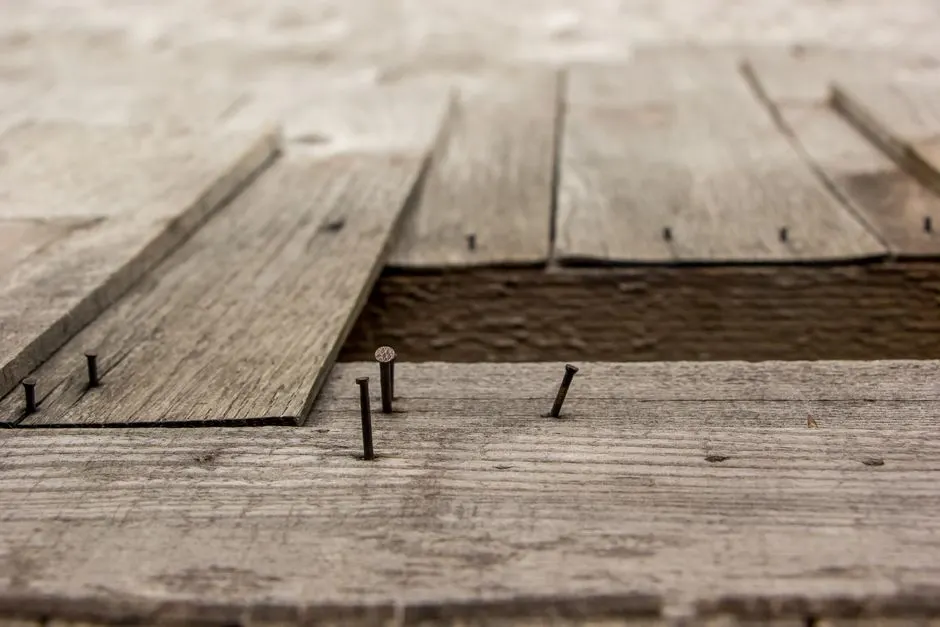
You can fix squeaky wood floors without replacing them in almost every case. The noise comes from movement between boards, between the board and the subfloor, or between the subfloor and the joists - not from the wood being worn out. Stopping that movement with shims, screws, or a targeted adhesive injection silences the floor for years, and it costs a fraction of a tear-out.
We have walked hundreds of Austin homes where the squeak was the only real problem. The finish was fine, the boards were flat, and the homeowner was ready to rip out perfectly good oak. Here is how we diagnose the noise, what you can do yourself, and what a professional repair costs in 2026.
What actually causes squeaky wood floors in Austin
Squeaky hardwood floors in Austin are caused by seasonal humidity swings that shrink and swell wood, loosening the fasteners that hold boards to the subfloor. Austin sits in a climate where indoor relative humidity can swing from 35% in a dry January to 65% in a wet May. Wood moves with that swing. Every time it moves, it works the nails and staples loose by a fraction of a millimeter - and a fraction of a millimeter is all a squeak needs.
There are four mechanical causes we find on nearly every job:
- Loose nails or cleats. The fastener has pulled slightly out of the joist, so the board rocks when you step on it.
- Subfloor-to-joist movement. The plywood or OSB under the hardwood has separated from the joist. This is common in homes built before 1990 with nailed (not glued-and-screwed) subfloors.
- Board-to-board rubbing. When gaps close in humid weather, adjacent boards rub and chirp.
- Missing or crushed shims. On older pier-and-beam homes - still common in Travis Heights, Hyde Park, and parts of East Austin - the joist itself moves against the beam.
One more cause worth ruling out: a floor that squeaks in one tight cluster, not along a seam, is often a duct or pipe rubbing the subfloor from below. If the noise sounds metallic rather than woody, that is usually the culprit.
Can you fix squeaky floors from above?
Yes - most squeaky floors can be repaired from above without pulling up a single board. That is the good news for anyone with a finished ceiling below, a glued-down engineered floor, or a second-story room over a drywalled kitchen.
From above, we have three tools that work:
- Trim-head screws through the floor. We drive a screw at a slight angle through the board and into the joist, then set the head just below the surface and fill with color-matched wax. This works best on solid hardwood with a thick wear layer.
- Adhesive injection. A two-part structural adhesive is injected through a small hole drilled at the squeak point. It expands, cures in about 20 minutes, and locks the board to the subfloor. No visible fastener.
- Face-nailing and filling. For a single loud board, two finish nails angled into the joist plus a wax fill stick is a 15-minute fix.
From below - in a basement or crawlspace - we can shim and screw the subfloor to the joist directly, which is faster and leaves the finished floor untouched. If you have access, that is the route we prefer.
DIY fixes that work (and the ones that don't)
The DIY fixes that actually work are the ones that address movement at the source: a fastener or a shim. Everything else is temporary.
What works
- Squeak-relief kits. A kit with a snap-off screw and a pilot bit runs $12-$25 at any Austin hardware store. Drive the screw, snap the head, fill with wax. Good for one or two isolated squeaks.
- Shimming from below. If you can reach the joist bay, a wood shim tapped in with construction adhesive stops the noise permanently. Cost: under $10.
- Graphite powder between boards. For board-to-board rubbing, a puff of graphite in the seam quiets it for a few months. It is a band-aid, not a fix, but it is free.
What does not work
- Baby powder or talc. It works for a week, then the humidity pulls it into the wood and the squeak returns louder.
- Driving a screw straight down. You will hit the joist only if you know exactly where it is. A missed screw leaves a visible hole and does nothing.
- Spray lubricants. WD-40 in a floor seam is a stain waiting to happen and does not stop movement.
If you are dealing with a broader repair - a cupped board, a water-stained plank, a section that has come loose - that is a different job. Our wood floor repair Austin TX team handles those alongside squeak work, usually in the same visit.
What professional squeaky floor repair in Austin looks like
Professional squeaky floor repair in Austin is a diagnostic job before it is a repair job. We spend the first 10 minutes walking the floor with a stud finder and a chalk line, marking every squeak and mapping the joists underneath. You cannot fix what you cannot locate.
Once we know where the joists run, the repair itself is fast. A typical single-room job takes 60-90 minutes. Here is the process:
- Mark each squeak with painter's tape.
- Map joist locations with a stud finder or by reading the subfloor seams.
- Choose the method - screw from above, adhesive injection, or shim from below - based on floor type and access.
- Test each repair by walking the spot before moving on.
- Fill fastener heads with color-matched wax and buff the area.
For engineered or floating floors, screws are off the table. We use adhesive injection only, because a screw through a floating floor locks it in place and causes buckling at the next humidity swing. That is one of the reasons we ask what kind of floor you have before we quote.
If your squeak is coming from a staircase rather than a flat floor, the fix is different again - treads and risers move independently, and the repair is usually from underneath. Our stair refinishing and installation Austin TX crew handles those calls weekly.
What it costs to stop wood floor squeaks in Austin TX
Typical 2026 pricing in Austin for squeaky floor repair runs $150-$400 for a single-room job, or $75-$125 per squeak if you have just a few isolated spots. A whole-house repair - say 8 to 12 rooms - usually lands between $600 and $1,200.
What moves the price:
- Access. A crawlspace or unfinished basement makes the job cheaper. A finished ceiling below adds labor.
- Floor type. Solid hardwood takes screws and adhesive. Engineered and floating floors are adhesive-only, which is slower.
- Number of squeaks. One squeak is a service call. Twenty squeaks is a half-day.
- Finish repair. If we have to fill and blend a visible area, add $50-$150.
Compare that to replacement. Tearing out and reinstalling 500 square feet of solid oak in Austin runs $4,500-$8,000 in 2026, plus the cost of moving furniture and living out of the room for a week. Squeak repair is roughly 5-10% of that number.
If your floor also needs a refresh - worn finish, gray patches, sun fade - it is worth bundling. Our hardwood floor refinishing Austin TX service can sand and recoat the same rooms after we silence the squeaks, so you pay one mobilization instead of two.
Common mistakes we see on squeaky floor jobs
The mistakes that cost homeowners the most are the ones that turn a $200 repair into a $2,000 repair.
- Over-screwing. Twenty screws in a 4-foot area locks the floor down so hard that the next humidity swing cracks a board. Two or three well-placed fasteners per squeak is the target.
- Using the wrong screw. Drywall screws snap under floor movement. You want trim-head or break-off screws designed for flooring.
- Ignoring the humidity source. If your indoor humidity is running above 60%, you will be back in the same spot next spring. A $150 dehumidifier is cheaper than a second repair visit.
- Filling before testing. Always walk the repair before you fill the hole. Once the wax is in, you cannot easily re-drive the screw.
- Assuming the subfloor is fine. On pier-and-beam homes, a sagging joist will keep squeaking no matter how many screws you drive. That is a structural fix, not a flooring fix.
We see the over-screwing mistake most often in newer builds out in Round Rock Wood Flooring territory, where homeowners tackle a squeak themselves the weekend after move-in. A light touch beats a heavy hand every time.
When to call a professional
Call a professional when the squeak is in a cluster rather than a single spot, when you cannot access the floor from below, or when the floor is engineered or floating. Those three situations are where DIY kits fail and where a wrong move causes visible damage.
You should also call us if the squeak is accompanied by a visible gap, a cupped board, a soft spot underfoot, or a noise that sounds like it is coming from the structure rather than the floor. Those point to a subfloor or joist issue that needs to be diagnosed before anything is fastened down.
General Wood Flooring LLC handles squeak repair across the Austin metro, from single-room fixes to whole-house quieting. We diagnose first, quote a flat price, and do the work in one visit in most cases.
Frequently Asked Questions
How do you fix squeaky wood floors without replacing them in Austin TX?
We stop the movement, not the wood. That means driving a trim-head screw from above, injecting structural adhesive at the squeak point, or shimming the subfloor from below. Most single-room jobs take 60-90 minutes and cost $150-$400 in 2026.
What causes squeaky hardwood floors in Austin Texas?
Austin's humidity swings - from roughly 35% in winter to 65% in spring - shrink and swell the wood, working nails and staples loose. The board then rocks against the subfloor or joist, and that movement is the squeak. Older pier-and-beam homes add joist movement on top of that.
Can squeaky floors be repaired from above in Austin?
Yes. Most squeaks can be silenced from above using trim-head screws or adhesive injection, with no need to pull up boards. We only go from below when there is a crawlspace or unfinished ceiling, because that route is faster and leaves the finish untouched.
Who fixes squeaky wood floors near me in Austin?
General Wood Flooring LLC repairs squeaky floors across Austin and the surrounding suburbs, including Circle C, Westlake, Round Rock, and Cedar Park. We diagnose the cause first, then quote a flat price before any work starts.
Will fixing a squeak damage my floor finish?
No, if it is done correctly. We set fastener heads just below the surface and fill with color-matched wax, so the repair is invisible from standing height. Adhesive injection uses a hole the size of a pencil lead, filled the same way.
Get help with Wood Flooring in Austin
Squeaky floors are a repair problem, not a replacement problem - and we can usually quiet a whole house in a single visit. If you want a straight answer on what your floor needs, we will come out, find the cause, and give you a flat price.
Call General Wood Flooring LLC at 512 877 7960 to schedule your squeak repair. We serve Austin, Round Rock, Cedar Park, Westlake, Circle C, and the surrounding communities.