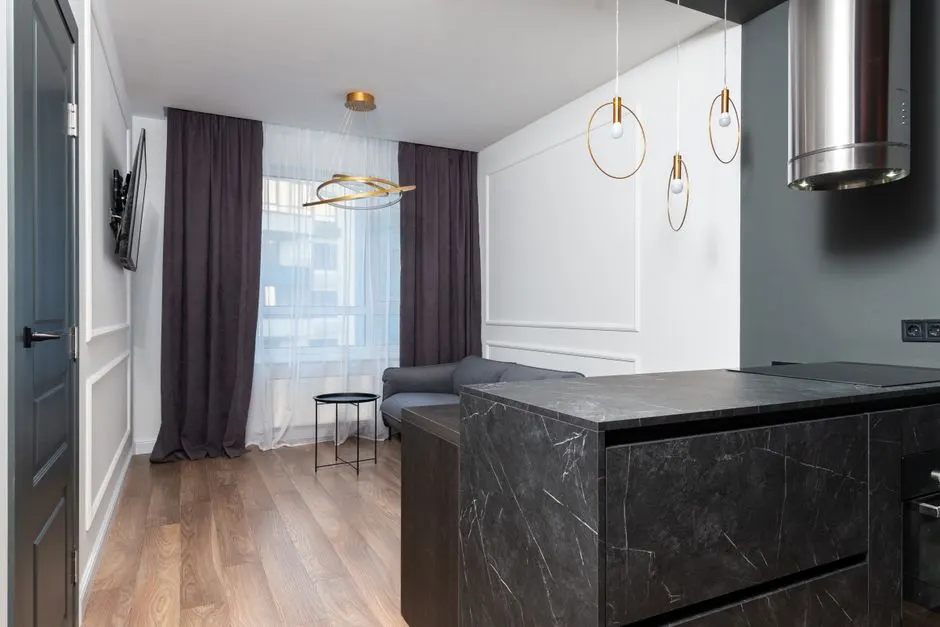
For most Austin rentals, vinyl plank (LVP) is the better choice over laminate. It handles the humidity swings that come with Central Texas summers, survives kitchen and bathroom spills without swelling, and costs roughly the same per square foot once you factor in replacement rates. Laminate still makes sense in a few narrow cases - a dry upstairs bedroom, a short-term flip, a tight budget on a low-traffic unit - but if you own a rental anywhere from Pflugerville down to Dripping Springs, LVP is the safer bet. Below we break down the cost, the durability, the install, and the mistakes we see landlords repeat every turnover season.
Vinyl plank vs laminate flooring for Austin rentals: the short answer
Vinyl plank vs laminate Austin rentals is a comparison between two floating-floor products that look similar on a showroom rack but behave very differently once a tenant moves in. Vinyl plank is a waterproof composite core topped with a photographic wear layer; laminate is a high-density fiberboard (HDF) core with a melamine wear layer and a printed image on top. That one material difference - plastic core versus wood-pulp core - drives almost every other difference in the table below.
Here is the fast version for a 900-square-foot rental unit:
- Water resistance: LVP waterproof; laminate water-resistant at best, and only if every seam is glued or the planks are the newer water-resistant HDF type.
- Humidity tolerance: LVP stable from 30% to 80% RH; laminate wants 35% to 65% and cups outside that.
- Installed cost in 2026: LVP $4.50-$7.50/sq ft; laminate $3.50-$6.00/sq ft.
- Expected lifespan in a rental: LVP 10-15 years; laminate 6-10 years.
- Repairability: LVP planks can be swapped individually; laminate usually requires pulling the run back to the damaged board.
If you only read one line: spend the extra dollar per square foot on LVP in any unit with a kitchen, a bathroom door, or a washing machine nearby.
How Austin's climate changes the calculation
Austin's climate is the single biggest reason the national vinyl-versus-laminate advice does not always apply here. We run 40-plus days a year above 100°F, spring humidity that swings from 30% to 90% inside a week, and a winter that can drop to the mid-20s for a few nights in February. That cycle is hard on any wood-pulp core.
Laminate absorbs moisture through its seams and its backing. When indoor humidity climbs above 65% for a week - which happens in Austin from May through September if the AC is off between tenants - laminate edges start to cup and the seams lift. Once that happens, the board is done. There is no sanding it out; you replace it.
LVP does not care. The core is PVC or a mineral composite, so a 90% humidity week does nothing to it. A tenant who leaves a cooler draining on the floor overnight, a dishwasher that leaks, a dog bowl that gets knocked over - none of that damages LVP. That is why we install vinyl plank flooring Austin TX in the vast majority of rental turnovers we handle, and why we still get calls for laminate flooring Austin TX mostly from owners of dry upstairs bedrooms or short-term flips.
Which is better for Austin rentals, vinyl plank or laminate?
Vinyl plank is better for Austin rentals in every room that sees water, and it is the safer choice in every room that does not. The only scenario where laminate wins is a climate-controlled upstairs bedroom in a newer build with no plumbing overhead and a landlord who wants the slightly firmer, more wood-like feel underfoot.
Here is how the two products actually perform across the rooms a typical Austin rental has:
Kitchen and laundry
LVP, no debate. Refrigerator ice-maker lines, dishwasher gaskets, and washer hoses fail on a schedule, and laminate will not survive a slow leak that sits for two days. We have pulled up laminate in Pflugerville rentals that swelled from a single failed supply line and had to replace 300 square feet.
Bathrooms and powder rooms
LVP again. Splash zones, toilet overflows, and wet mops kill laminate edges. If the rental has a hall bath shared by kids, LVP is the only product we recommend.
Bedrooms and living areas
Either works if the unit is climate-controlled year-round. Laminate gives you a slightly harder, more resonant feel and a wider range of wood-grain visuals. LVP gives you scratch resistance that holds up better against pet claws and furniture drags.
Stairs
LVP, because stair noses and treads take the most abuse in any rental. If the staircase is original wood and you want to keep it, refinishing is a separate conversation - we handle that through stair refinishing and installation Austin TX.
Cost comparison: vinyl plank vs laminate in Austin TX
Typical 2026 pricing in the Austin metro puts LVP installed at $4.50 to $7.50 per square foot and laminate installed at $3.50 to $6.00. That gap looks small on a per-foot basis, but the real cost difference is in how often you replace it.
Here is what a 900-square-foot rental floor actually costs over a 15-year hold:
- Laminate, mid-grade: $4,500 installed, replaced at year 8, replaced again at year 15 - roughly $9,000 total.
- LVP, mid-grade: $5,400 installed, still going at year 15 - roughly $5,400 total.
That is a $3,600 swing on a single unit, before you count the vacancy days lost to a replacement. Laminate is cheaper on day one and more expensive over the life of the property. LVP is the opposite.
If you are comparing this against hardwood, the numbers are different again - real wood runs $8 to $14 per square foot installed and lasts 30-plus years with refinishing, which is why some owners in Westlake Wood Flooring territory still choose it for higher-end rentals. For a standard Class B rental, LVP is the value play.
Durability and lifespan in rental conditions
Rental floors take three to four times the abuse of an owner-occupied floor. Tenants move furniture without pads, drag coolers across the kitchen, and let dogs run on hardwood-look planks. The wear layer is what protects you.
LVP wear layers are measured in mils. For a rental, do not go below 12 mil. A 20-mil wear layer is the sweet spot - it costs about $0.75 more per square foot than 12-mil and roughly doubles the scratch resistance. Laminate wear layers are rated by AC class; AC3 is the minimum for a rental, AC4 is better, and AC5 is overkill for a single-family unit.
What actually kills each product in an Austin rental:
- Laminate: moisture at the seams, pet urine that sits overnight, and mop water. Any of those three ends the floor.
- LVP: direct sunlight through west-facing windows over 10-plus years (fading), and heavy furniture dragged without pads (gouges). Both are cosmetic, not structural.
Realistic lifespans in a working rental: LVP 10 to 15 years, laminate 6 to 10 years. If the unit turns over every 12 to 18 months, laminate rarely makes it past the second tenant without visible seam damage.
Installation: what actually happens on turnover day
Both products are floating floors, so installation is fast - but the prep underneath is where the job is won or lost. A floating floor over a wavy slab will telegraph every dip within six months.
Here is the sequence we run on a typical Austin rental turnover:
- Pull the old flooring and haul it out. Carpet, old laminate, and glued-down vinyl all come up before anything new goes down.
- Check the slab for flatness. Austin slabs, especially in 1990s and 2000s builds, often have 1/4-inch dips that need to be floated out.
- Install a moisture barrier and underlayment. LVP needs a vapor barrier over slab-on-grade; laminate needs a foam or combo underlayment rated for its AC class.
- Acclimate the planks. LVP needs 24 hours in the unit; laminate needs 48 hours.
- Lay the floor, leaving a 1/4-inch expansion gap at every wall.
- Reinstall baseboards or add quarter-round, then clean up.
A 900-square-foot unit is a two-day job for our crew, sometimes one day if the slab is clean and the old floor comes up easy. We handle the tear-out through floor removal and demolition Austin TX so you are not juggling two contractors on a tight turnover window.
One thing to know: you cannot install LVP or laminate over an existing laminate floor and expect it to last. The old floor's seams telegraph through, the total height throws off door clearances, and the floating layers can shift against each other. Pull the old floor. It is a half-day of extra work that saves you a callback.
Common mistakes landlords make with rental flooring
The same four mistakes show up on almost every rental flooring job we bid in Austin. Avoiding them saves thousands over a 10-year hold.
- Buying on price alone. A $2.19/sq ft LVP with a 6-mil wear layer is not a rental floor. It is a one-tenant floor. Spend the extra $0.75 per square foot.
- Skipping the moisture barrier. Austin is a slab-on-grade town. Without a vapor barrier, moisture wicks up and either swells the laminate or, in LVP, causes the adhesive on the underlayment to fail.
- Installing laminate in a bathroom or laundry. We see this constantly in older Pflugerville and Round Rock rentals. It always ends in a full replacement.
- Not leaving an expansion gap. A floor installed tight to the wall will buckle in the first Austin summer. A 1/4-inch gap hidden by baseboard is the entire fix.
One more: do not let a handyman install over a dirty slab. Grit under a floating floor grinds through the wear layer from below. Sweep, vacuum, and wipe before the underlayment goes down.
When to call a professional
Call a professional when the unit is more than 400 square feet, when the slab is uneven, or when the old floor is glued down. Those three conditions turn a weekend project into a week-long one, and a bad install costs more to fix than the original job.
We handle rental flooring across the Austin metro, from single-unit turnovers to multi-property portfolios. If you own rentals in Pflugerville Wood Flooring territory or anywhere north of the river, we can usually walk the unit, measure, and quote the same week. We also work with property managers who need a fixed per-unit price they can budget against.
If you are weighing LVP against real hardwood for a higher-end rental, our team at Wood Flooring Austin TX can walk you through the numbers on both. We install, refinish, and repair - so the recommendation is based on what actually holds up in Austin, not what a showroom is trying to move.
Frequently Asked Questions
Is vinyl plank or laminate better for Austin rentals?
Vinyl plank is better for nearly every Austin rental. It is waterproof, tolerates 30% to 80% indoor humidity, and lasts 10 to 15 years in a working rental. Laminate lasts 6 to 10 years and fails fast in kitchens, bathrooms, and laundry rooms.
How much does rental flooring cost in Austin TX?
In 2026, expect $4.50 to $7.50 per square foot installed for LVP and $3.50 to $6.00 for laminate. A 900-square-foot unit runs $4,000 to $6,750 for LVP, including tear-out and disposal of the old floor.
What flooring lasts longest in Austin rental properties?
LVP with a 20-mil wear layer lasts longest among floating floors - 10 to 15 years. Real hardwood outlasts everything at 30-plus years with periodic refinishing, but it costs roughly double and needs more careful tenant screening.
Can you install vinyl plank over laminate in Austin Texas?
We do not recommend it. The old laminate's seams telegraph through, door clearances shrink, and the two floating layers shift against each other. Pull the old floor first - it adds half a day and prevents callbacks.
How long does a rental flooring install take?
A 900-square-foot unit takes two days with our crew, including tear-out, slab prep, and baseboard reinstall. If the slab is flat and the old floor comes up clean, we can sometimes finish in one long day.
Get help with Wood Flooring in Austin
Whether you are turning over a single rental or flooring a whole portfolio, we can measure, quote, and install without dragging the vacancy out. Call General Wood Flooring LLC at 512 877 7960 and we will get your Austin rental back on the market with a floor that survives the next tenant.